
"originated from World War II"
500 article(s) found
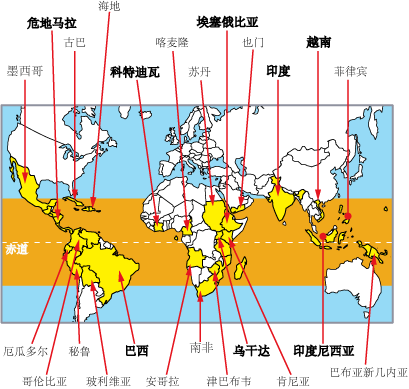
Coffee producing area 53 coffee producing areas in the world, Brazilian coffee producing area
Brazil's low-acidity, moderately roasted coffee beans from the World Coffee Center Brazil is vividly likened to the giant and monarch of the coffee world. There are about 3.97 billion coffee trees there, and small farmers now grow 75% of the country's coffee. Brazil produces twice or even three times as many coffee as Colombia, which is the second largest coffee producer in the world.

Introduction to the characteristics and varieties of coffee flavor description and grinding treatment in Mercedes Manor in El Salvador
El Salvador's coffee accounts for 40% of the country's exports, and it is usually picked in November, December and January-March of the following year. The export of raw beans lasts almost all year round. Coffee is produced in seven of the country's 14 provinces, with the largest number in the northwestern provinces of chalatenango and santa ana. The coffee produced in El Salvador is 100% Arabica, of which 68% is
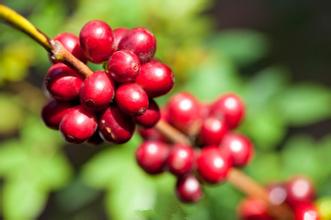
Description of flavor and flavor of coffee beans in El Salvador
El Salvador coffee beans characteristic flavor description taste variety production area introduction in El Salvador, Cuscarpa region is rich in coffee beans is the best, its weight is slightly light, aromatic, pure, slightly sour. Like Guatemala and Costa Rica, coffee in El Salvador is graded according to altitude, and the higher the altitude, the better the coffee. The best brand is
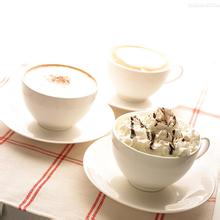
Introduction to the treatment of Grinding degree of Coffee varieties described by Mercedes Manor in El Salvador
El Salvador's domestic topography is mainly mountainous, plateau, volcanic, known as the country of volcanoes, Santa Ana active volcano 2385 meters above sea level, for the country's highest peak; the north of the country is the Lompa River Valley, the south is a narrow coastal plain El Salvador implements a representative democratic republic system of separation of powers, the president and vice president are directly elected by the whole country, may not be re-elected, judicial power is determined by

Introduction to the quality characteristics of El Salvador Coffee Bean Flavor description treatment
In El Salvador, the coffee beans rich in the Kuskabapa region are the best, slightly lighter, fragrant, pure and slightly sour. Like Guatemala and Costa Rica, coffee in El Salvador is graded according to altitude, and the higher the altitude, the better the coffee. The best brand is Pip, whose quality has been recognized by the American Organic Certification Society. In addition

The way the name of Manning coffee is handled.
Manning is not the name of the producing area, the place name, the port name, nor the name of the coffee breed. How did it get its name? In fact, it is the transliteration of the mandheling people in Mandaining, Indonesia. During the Japanese occupation of Indonesia during World War II, a Japanese soldier drank mellow coffee in a cafe, so he asked the shopkeeper the name of the coffee.

Fragrant and pure Salvadoran Mercedes coffee beans flavor description treatment quality characteristics and taste
El Salvador Coffee Bean introduction El Salvador boutique coffee is concentrated in the volcanic rock producing areas of Santa Ana in the west and Charantanan fruit in the northwest. The top 10 cup tests in recent years almost all come from these two producing areas, with an elevation of about 9-1500 meters above sea level. Mainly bourbon (68%), followed by Pacas (29%), mixed-race Pacamara, du Laai and Kaddura accounted for only 3% and 1742

Introduction to the flavor description method of Indonesian Mantenin Vahana Manning Coffee
Indonesia Mantenin Coffee Flavor description: during the Japanese occupation of Indonesia during World War II, a Japanese soldier drank mellow coffee in a cafe, so he asked the shopkeeper the name of the coffee, and the owner mistakenly thought he was asking where you were from. So answer: Mandaining. After the war, the Japanese soldiers recalled the manning they had drunk in Indonesia. So he sent 15 tons of Indonesian coffee to Japan, and unexpectedly

El Salvador Coffee Flavor Taste Description, El Salvador Coffee Introduction
Pay close attention to the coffee comment (Weixin Official Accounts vdailycom ) and find that the beautiful coffee shop opens its own small shop El Salvador coffee refers to the coffee produced in El Salvador, a small country in South America. The coffee is light, aromatic, pure and slightly sour. The flavor characteristic is excellent balance. It is a specialty of Central America. It has sour, bitter and sweet taste characteristics, and the best baking degree is moderate and deep. sal

The origin of the name of Mantenin coffee beans in Indonesia
Manning is not the name of the producing area, the place name, the port name, nor the name of the coffee breed. How did it get its name? In fact, it is a phonetic error of the mandheling people in Mandaining, Indonesia. During the Japanese occupation of Indonesia during World War II, a Japanese soldier drank mellow coffee in a cafe, so he asked the shopkeeper the name of the coffee, and the boss mistook him for asking where you were.

Sweet and bitter taste of Brazilian Xilado fine coffee beans planting situation Geographical location Climate altitude profile
Coffee production has gradually become a science since the introduction of coffee trees from Guyane française in 1720. Before 1990, the Brazilian government strictly controlled the coffee industry, with both severe interference and price protection measures, and the state has always implemented minimum price protection measures for farmers, resulting in coffee overproduction. Before World War II, surplus stocks amounted to 780

A comprehensive introduction of Brazilian coffee beans Central American region
Brazils to distinguish it from Milds coffee. The vast majority of Brazilian coffee is unwashed and sun-dried and is classified according to the name of the state of origin and port of transport. Brazil has 21 states and 17 states produce coffee, but four of them produce the largest, accounting for 98% of Brazil's total output. They are: Parana, SaoPaulo and Milas.

The Cultural History of Coffee beans how did Manning's name come from
Manning is not the name of the producing area, the place name, the port name, nor the name of the coffee breed. How did it get its name? In fact, it is a phonetic error of the mandheling people in Mandaining, Indonesia. During the Japanese occupation of Indonesia during World War II, a Japanese soldier drank mellow coffee in a cafe, so he asked the shopkeeper the name of the coffee, and the boss mistook him for asking where you were.

A brief introduction to the planting situation, geographical location, climate and altitude of the fragrant coffee beans from Hilado, Brazil.
Unlike in the past, Brazil's economy is now less dependent on coffee, which accounts for only 8% to 10% of GDP. Before World War II, Brazil accounted for 50% or more of the world's coffee production, and now it is close to 30%. But the country's impact on the world's coffee, especially on coffee prices, is significant. For example, two frost disasters in 1994 caused global coffee.

Brief introduction and Development of Nestle Coffee
Nestle Coffee originated in 1930. When the Brazilian government came into contact with Nestl é, coffee authority Max Morgentel immediately set out with his research team to develop a way to mix with water while keeping the coffee authentic. After seven years of research in a Swiss laboratory, they finally found the answer. Nestle Coffee has first become a world-famous brand. two

Brief introduction of Salvadoran Coffee in the World Coffee producer Manor Micro-batch Water Pacamara
Country profile Republic of El Salvador, RepblicadeElSalvador in Spanish, theRepublicofElSalvador in English. It is located in Central America, bordering Guatemala and Honduras in the north, and the Pacific coastline in the west and south. The smallest country in Central America and the most densely populated country in Central America. The land area is 21393 square kilometers.
How did Manning, the common sense of boutique coffee, get his name?
Manning is not the name of the producing area, the place name, the port name, nor the name of the coffee breed. How did it get its name? In fact, it is a phonetic error of the mandheling people in Mandaining, Indonesia. During the Japanese occupation of Indonesia during World War II, a Japanese soldier drank mellow coffee in a cafe, so he asked the shopkeeper the name of the coffee, and the boss mistook him for asking where you were.

El Salvador Himalayan coffee flavor with soft, slightly sour and beautiful sweetness
El Salvador was originally inhabited by the Mayan Indians. Scenery of the Republic of El Salvador (11 pictures) was colonized by Spain in 1524. Independence was declared on September 15, 1821 and later became part of the Mexican Empire. In 1823 the empire collapsed and El Salvador joined the Union of Central America. The Communist Party of China was declared on February 18, 1841 after the disintegration of the Union in 1838.
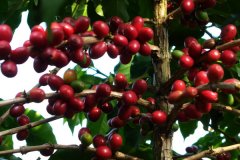
The famous producing area of Peruvian coffee is Chanchamayo, the mellow American coffee.
The global trend of modern coffee has gone through three popular stages: the first stage is the popularity of cheap coffee represented by instant coffee from the post-World War II to the 1960s; the second stage is the popularity of commercial coffee represented by Starbucks from the 1960s to the beginning of this century; the third stage is the popularity of boutique coffee, which originated in the 1970s and has become a trend in the past decade.
Flavor description of coffee beans in Mercedes Manor in El Salvador
Description of the flavor of coffee beans from Mercedes Manor in El Salvador the taste of beans varies from region to region. The factors that affect the taste are the variety of coffee trees, the soil properties of growth, the climate and altitude of the cultivation garden, the care of picking results, and the process of bean treatment, etc. These elements vary from region to region, while bakers and integrated manufacturers are looking for